The Local Search Playbook: Getting Found on Google Maps and AI
Erik Palmquist · 8th and Palm · May 24, 2026
For a local service business, your Google Business Profile is often more important than your website for getting found. It’s the listing that shows up in the map pack, on Google Maps, and increasingly in AI answers, and optimizing it is mostly free. The fastest local-visibility win for most owners isn’t a website redesign; it’s a complete, well-tended profile.
Below: how the profile works, the handful of things that move it, and why your site and your listing have to work as a team.
Why the Profile Is the Front Door
When someone searches for a plumber, dentist, or accountant “near me,” Google usually answers with the map pack — three local listings — long before anyone scrolls to the blue links. That listing is your Google Business Profile, and most of its traffic doesn’t come from people searching your name.
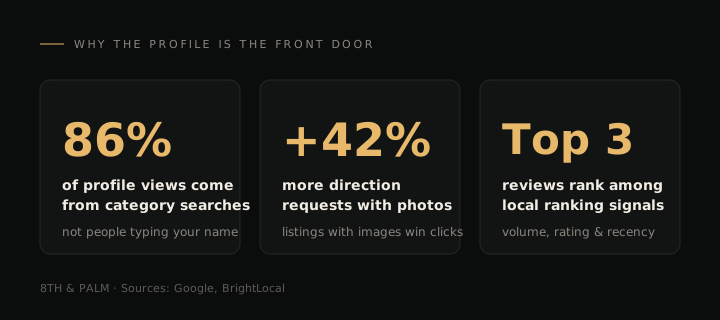
The large majority of profile views, around 86%, come from discovery searches where people look for a category or service, not from people typing your business name (Google). So the profile works less like a business card for people who already know you and more like a storefront Google puts in front of people who don’t, at the moment they’re ready to hire.
The Elements That Actually Move Your Ranking
Google ranks local listings on a mix of relevance, distance, and prominence. You can’t change where your customers are standing, but you control the rest:
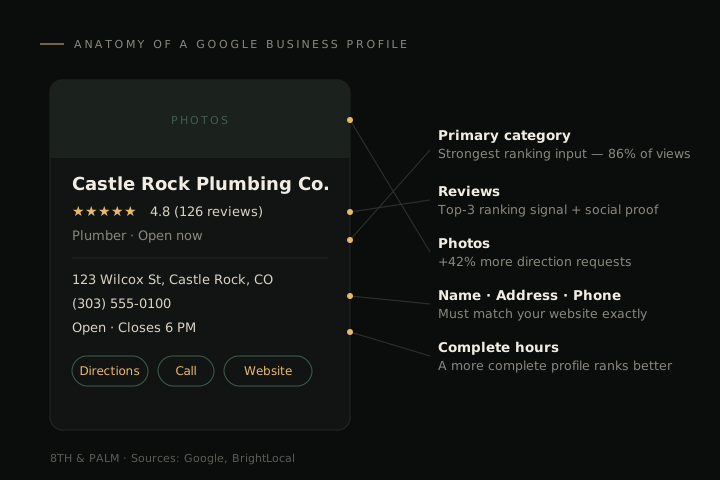
- Primary category. The single strongest input. Choosing “General Contractor” instead of “HVAC Contractor” can keep you out of the searches that matter most. Pick the most specific category that fits.
- Reviews. Volume, rating, and recency are all among the strongest local ranking signals, and they double as your most visible social proof.
- Photos. Profiles with photos receive about 42% more requests for directions (Google). Real photos of your work, team, and location outperform stock every time.
- Complete information. Hours, services, service areas, and a real description. A more complete profile ranks better than a half-finished one.
- NAP consistency. Your name, address, and phone number, identical everywhere they appear online.
NAP Consistency: The Boring Detail That Costs You
The element owners most often get wrong is the least glamorous one: making sure your Name, Address, and Phone number match everywhere. If your hours say one thing on your site and another on Yelp, or your phone number changed but three directories still list the old one, Google loses confidence, and so do the AI tools now pulling from the same sources.
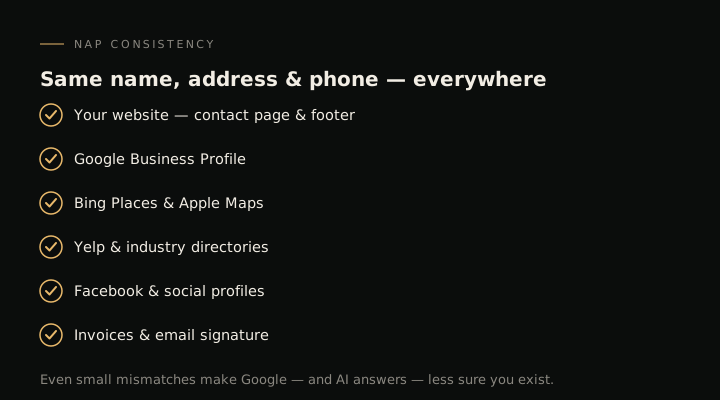
Mismatched listings are a small problem with an outsized drag on your visibility. It’s worth an afternoon to audit every place your business is listed and make them all agree.
One Profile, Three Surfaces
This is especially worth doing in 2026, because the same clean, consistent profile now feeds three different ways customers find you.
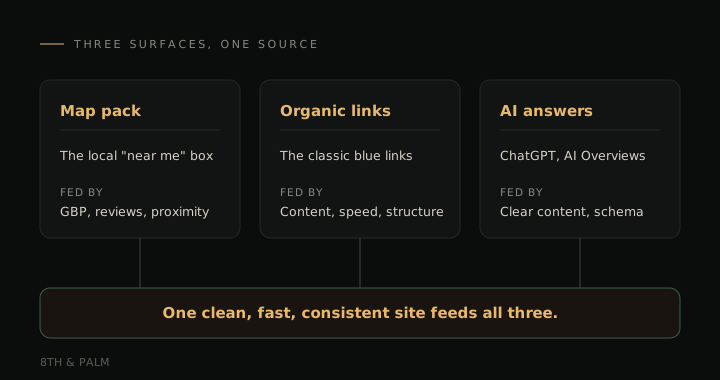
- The map pack — the local results, fed by your profile, reviews, and proximity.
- Organic links — the classic results, fed by your website’s content and quality.
- AI answers — ChatGPT, Google’s AI Overviews, and similar tools, which increasingly recommend local businesses and pull from your profile, your reviews, and consistent information across the web.
When an AI tool recommends “a few highly rated plumbers in Castle Rock,” it leans on exactly the signals a strong Google Business Profile provides. The businesses that show up are the ones with complete profiles, real reviews, and consistent information. The same profile that wins the map pack is what gets you mentioned in the AI answer.
Your Profile and Your Website Are a Team
A strong profile earns the click, but your website still has to close it. If your listing sends a ready-to-hire customer to a slow, clunky, or confusing site, you’ve done the hard part and fumbled the easy one.
That’s why local SEO and your site quality can’t really be separated. The profile earns the visit; a fast, clear website turns it into a call or a booking. (If you’re not sure your site is holding up its end, our speed grader will tell you in about a minute.) If customers are searching and still not finding you, it’s worth diagnosing why your site isn’t showing up on Google, since the profile and the organic side often need different fixes. For how local fits into everything else, see our guide to small business SEO.
A Quick Optimization Checklist
Work through these in order:
- Claim and verify your profile if you haven’t. It’s free.
- Set the most specific primary category that describes what you do.
- Fill in everything — hours, services, service areas, description, and a real set of photos.
- Audit your NAP across your website, directories, and social profiles until they all match.
- Build a steady review habit — ask every satisfied customer, and respond to the reviews you get.
If you’d like a second set of eyes on whether your site is ready to convert the traffic a strong profile sends, you can reach out directly; no pressure, just an honest look.
Frequently Asked Questions
Q: How do I fully optimize my Google Business Profile? A: Claim and verify it, choose the most specific primary category, complete every field (hours, services, service areas, description, photos), keep your name/address/phone consistent everywhere, and build a steady stream of genuine reviews. Completeness and accuracy do most of the work.
Q: What is Google Business Profile optimization? A: It’s the process of setting up and maintaining your free Google listing so it ranks well in the map pack and Maps and earns clicks: getting the category, information, photos, and reviews right so Google shows you to nearby customers searching for what you do.
Q: How important are reviews for local ranking? A: Very. Review volume, rating, and recency are among the strongest local ranking signals, and they’re also your most persuasive social proof. A steady, ongoing habit of requesting reviews beats a one-time push.
Q: Is SEO dead or evolving in 2026? A: Evolving. AI answers are now part of how people find local businesses, and they pull from the same signals as your Google Business Profile: complete information, real reviews, and consistency across the web. Optimizing your profile increasingly helps you show up in AI recommendations too, not just the map pack.